

|
For immediate release
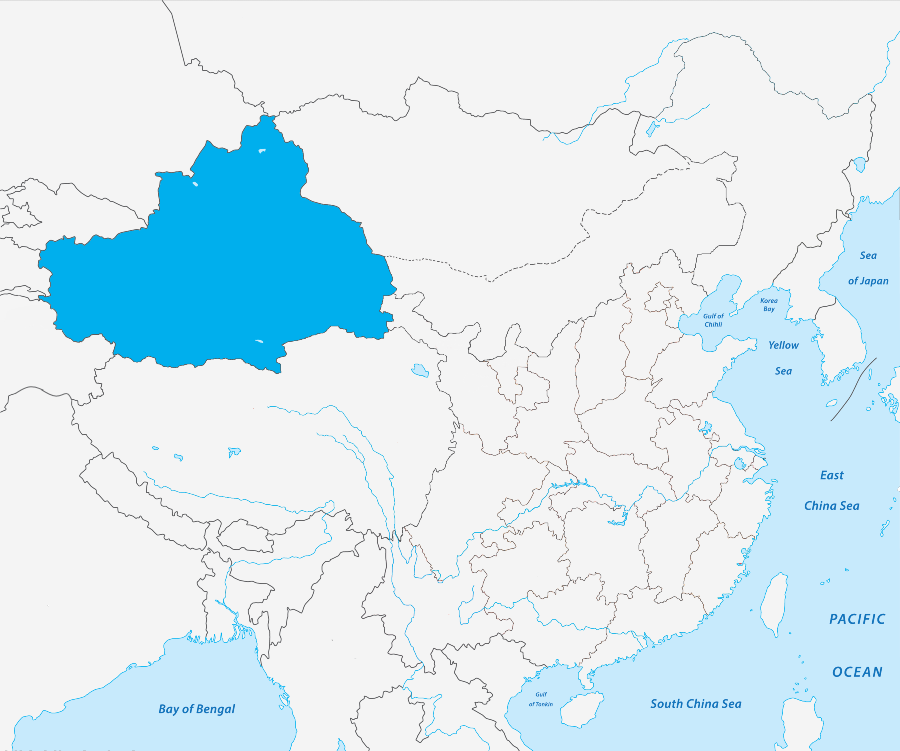
The Uyghur American Association (UAA) strongly condemns the recent sentencing of three Uyghur webmasters, who were convicted on charges of “endangering state security”. According to the brother of one of the men, their trials are believed to have taken place on July 23 or July 24, around the same time as Uyghur webmaster Gheyret Niyaz was sentenced to 15 years in prison for “endangering state security” for speaking to foreign journalists. “The Chinese government is suffocating Uyghur voices,” said Uyghur democracy leader Rebiya Kadeer. “Chinese authorities are committing an egregious violation of human rights and the freedom of expression by imprisoning these three men, who have done nothing more than work for websites and voice their opinions. Chinese legal guarantees regarding the freedom of speech and freedom of expression clearly mean nothing. Uyghurs in East Turkestan can only live in fear, when they are jailed for years merely for speaking out.” Dilmurat Perhat, who lives in England, told UAA that his brother Dilshat Perhat, the 28-year-old webmaster and owner of the website Diyarim, was sentenced to five years in prison last week following a closed trial in a court in Urumchi, the regional capital of East Turkestan (also known as Xinjiang Uyghur Autonomous Region). Dilmurat, who received the information from sources within East Turkestan, also told UAA that Nureli, the webmaster of the website Salkin, and Nijat Azat, the webmaster of the website Shabnam, were tried in closed trials on or around the same day and sentenced to three and ten years respectively. Dilmurat, who was also a webmaster for Diyarim, said that Dilshat had repeatedly deleted postings that appeared on the message board of the website that advertised a peaceful demonstration planned for July 5, 2009 in Urumchi, and that Dilshat had called Chinese police multiple times to tell them about the postings. Dilshat reportedly told his brother that the police told him not to worry, as they knew about the plans for the demonstration that were being posted. |
|
Originally published by The New York Times, 30 July 2010
By ANDREW JACOBS
BEIJING — For China’s investigative journalists, who grapple with heavy-handed censors and accusations of bribe-taking, the case of a Shanghai-based reporter appears to offer a positive turn.
The episode did not start auspiciously for the reporter, Qiu Ziming, 28. He went into hiding this week after county police in Zhejiang Province announced they were seeking his arrest for reporting on accusations of insider trading at a paper company in a four-part series in The Economic Observer, a well-regarded weekly.
But on Wednesday, Mr. Qiu’s colleagues sprang into action, publishing articles on the Internet and e-mailing links to a satirical wanted poster. Even the state-owned broadcaster, CCTV, ran a segment that revealed how the company, which went public in 2004, had used its political connections to exact revenge.
In the broadcast, a reporter asks a representative how the company, Zhejiang Kan Specialty Materials, was able to have the Suichang county police try to arrest him. “You can say that this is a kind of concern and love the government has for star enterprises like us,” the representative said. “The government helps us handle certain issues.”

China has jailed three ethnic Uighur website owners as it clamps down on dissent a year after deadly ethnic riots in Xinjiang, say reports.An exiled activist group, the Uyghur American Association (UAA), said the three men were sentenced to 10, five and three years respectively.Officials have not confirmed the charges or the sentences.In last year’s violence between Uighurs and Han Chinese, the authorities say nearly 200 people were killed.The three men who were reportedly jaioled had founded or managed Uighur-language websitesThey were identified as Dilshat Perhat, webmaster of Diyarim; Nureli, webmaster of Salkin; and Nijat Azat, webmaster of Shabnam.The websites, among the most popular in the Uighur language, were blocked by the Chinese authorities last year.UAA quoted a brother of one of the men saying they were sentenced last week.The men were convicted of “endangering state security” during a one-day trial, said Mr Perhat’s brother, Dilmurat Perhat, who lives in London.”We didn’t do anything against the Chinese government on the Diyarim website,” the brother was quoted saying. “There were tens of thousands of people accessing the website every day.”Court officials would not confirm the reports.Separately, a Uighur journalist, Gheyret Niyaz,was jailed last week for 15 years for speaking to foreign journalists during last year’s riots.”The Chinese government is suffocating Uighur voices,” said the Uighur activist Rebiya Kadeer, who lives in the US.
Originally published by The Associated Press,30 July 2010
By TINI TRAN
BEIJING — China has jailed three minority Uighurs who ran websites with content considered politically sensitive by the government, according to a media report and an advocacy group.
Their sentencing last week is the latest move by the Chinese government to rein in dissent following last year’s deadly ethnic violence in the far western Xinjiang region that erupted between the minority Uighur population and the majority Han Chinese.
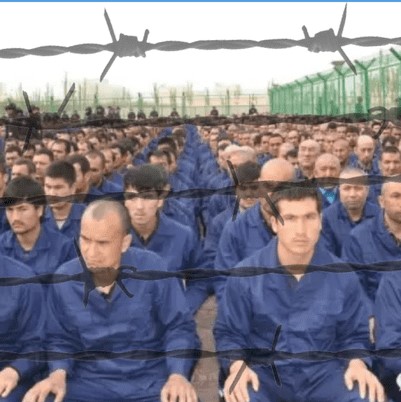
Long-standing tensions between the Uighurs, a largely Muslim ethnic group, and the Han flared into open violence in the regional capital of Urumqi in July 2009. The government said 197 people were killed. Hundreds of people were arrested, about two dozen were sentenced to death and many Uighurs remain unaccounted for and are believed to be in custody.
Last week, the three men, identified as Dilshat Perhat, webmaster of Diyarim; Nureli, webmaster of Salkin; and Nijat Azat, webmaster of Shabnam, were sentenced to five years, three years and 10 years respectively, said Radio Free Asia and the Uyghur American Association, citing a brother of one of the men.
For immediate release
July 29, 2010
Contact: World Uyghur Congres (www.uyghurcongress.org)
0049 (0) 89 5432 1999 (Munich, Germany), +1 (202) 535 0048 (Washington, DC, USA)
The World Uyghur Congress (WUC) strongly denounces the sentencing of three Uyghur male webmasters to various prison terms late last week by the Intermediate People’s Court of Urumchi in East Turkestan (also known as the Xinjiang Uyghur Autonomous Region of China (XUAR)) in connection with their administration of their Uyghur-language websites. Nijat Azat (webmaster of Shabnam), Dilshat Perhat (webmaster and owner of Diyarim), and Nureli (webmaster of Salkin) were convicted on charges of “endangering state security” according to Dilshat’s brother, Dilmerat, another webmaster of Diyarim who currently resides in England and received information from sources inside East Turkestan. [1] The Chinese authorities have accused Shabnam, Diyarim, and Salkin, as well as other Uyghur-language websites, of helping to foment the unrest in Urumchi, the regional capital, in July 2009. [2] According to Dilmurat Perhat, the three men were sentenced after a series of closed trials that took place on July 23rd or July 24th [3] around the same time that Uyghur journalist and website editor Gheyret Niyaz was sentenced to fifteen years in prison [4].
Palau’s President Johnson Toribiong says he’ll press Australia to take in former Guantanamo detainees from the Chinese Muslim Uighur minority, who want to be resettled permanently.
President Toribiong says he’ll raise the issue of the Uighurs’ resettlement during talks with Australian officials, on the sidelines of next month’s Pacific Islands Forum in Vanuatu.
The six men from China’s remote northwestern region of Xinjiang were detained at Guantanamo Bay in late 2001.
Although cleared of any wrongdoing four years later, they remained in detention until last year when the former US-administered Pacific territory of Palau agreed to provide a temporary home.
TAIPEI (Reuters) – Wu’er Kaixi, a leading figure in China’s 1989 pro-democracy movement, said on Thursday he would step up efforts to re-enter China after two failed attempts, saying he would risk arrest to visit his parents.Wu’er Kaixi fled China following the bloody crackdown on pro-democracy demonstrators around Beijing’s Tiananmen Square on June 4, 1989.
He said he was barred from boarding a flight from Japan to China last month and detained in Macau last year en route to the mainland. He expects to be arrested and deported if he makes it back in the future but is prepared to serve a prison sentence.
“I will keep trying. There will be more actions to come,” Wu’er Kaixi, 42, told a news conference in Taipei, without giving specifics. “There will be elevated actions.”
Public discussion of the events surrounding 1989 remain taboo in China and are banned from mention in state-run media, but if Wu’er Kaixi re-entered China, the Tiananmen movement would get international attention and irritate Beijing.
Originally published by RFA, 28 July 2010
By Mihray Abdilim
Three webmasters from northwestern China are jailed for “endangering state security.”
HONG KONG—Three webmasters, all members of the Uyghur ethnic minority, have been sentenced to jail for publishing content deemed politically sensitive by the Chinese government, according to a brother of one of the men.
The defendants are Dilshat Perhat, webmaster and owner of Diyarim; Nureli, webmaster of Salkin; and Nijat Azat, webmaster of Shabnam. They were sentenced last week in Urumqi, capital of the Xinjiang Uyghur Autonomous Region (XUAR) in northwestern China.
Dilmurat Perhat said his brother Dilshat Perhat received five years in prison, while Nureli and Nijat Azat received three years and 10 years, respectively, for “endangering state security.”
No official comment or confirmation was immediately available.
The verdicts were handed down in a series of closed trials at the Urumqi Intermediate People’s Court, Dilmurat Perhat said. All three websites publish online in the Uyghur language, spoken by the predominantly Muslim Uyghur ethnic minority.
Originally published by The Economist,28 July 2010
YOUR correspondent was on leave on July 22nd, when Human Rights Watch released its report on the abuses that Chinese security forces are alleged to have committed in Tibet since the massive eruption of anti-Chinese unrest there in 2008. The 73-page document describes itself as the first comprehensive examination of the ongoing crackdown. Based largely on interviews with 200-odd Tibetans who left the region as refugees or on visits, it is a valuable contribution to an under-reported story.
China is adept at ensuring that little news of such repression gets out. In the far western province of Xinjiang, where the authorities have been cracking down since an outbreak of ethnic violence in July last year, the tactic has been to sever communications links with the outside world by mobile telephone or the internet (though restrictions have been relaxed since May). On the Tibetan plateau, the authorities in some places confiscated mobile phones and computers from monks and made it all the more difficult for foreign journalists—who are rarely welcome at the best of times—to visit. By chance I was the only foreign reporter on the spot when rioting erupted in Lhasa on March 14th 2008. I was not allowed back again until nearly two years later and then only for a frustratingly brief tour.